


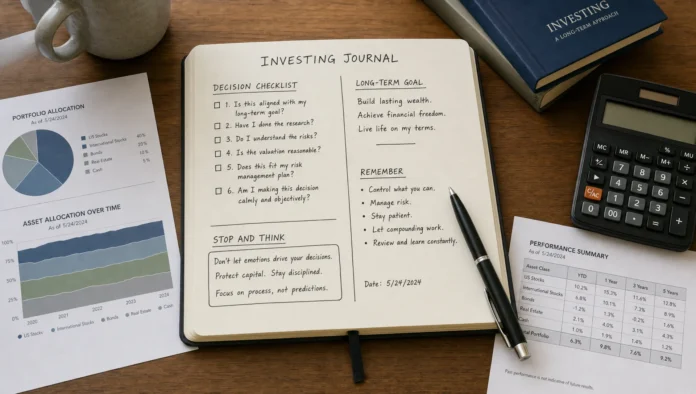
The most expensive investing mistakes are rarely caused by one unlucky stock pick. More often, they come from a weak process: buying because a share is popular, selling because the market is falling, taking too much risk in one position, or confusing a good company with a good investment.
Good share tips should not be treated as shortcuts to quick profits. The best ones help you slow down, ask better questions, and protect your capital before chasing returns. Whether you are buying your first share or reviewing a growing portfolio, the goal is not to be right every time. The goal is to avoid mistakes that can permanently damage your long-term results.
Start with the decision you can control: why you are investing
Before choosing shares, define the purpose of the money. Are you investing for retirement, a home deposit, your children’s education, or long-term wealth building? The answer changes what you should buy, how much risk you can take, and how you should react when prices fall.
A share that may be suitable for a 25-year investment horizon may be completely unsuitable for money you need in two years. This is why one of the most practical share tips is also one of the simplest: do not put short-term money into volatile shares.
If you expect to need the cash soon, market timing risk becomes a serious problem. Even a strong business can see its share price fall sharply in a broad market decline. If you must sell during that decline, your time horizon has turned a temporary market loss into a real financial loss.
A useful starting framework is:
| Investment goal | Typical time horizon | Risk level to consider | Main mistake to avoid |
|---|---|---|---|
| Emergency savings | 0 to 2 years | Low | Investing money you may need soon |
| Home deposit or major purchase | 2 to 5 years | Low to moderate | Chasing high returns with essential funds |
| Wealth building | 5 to 10+ years | Moderate to high | Selling too early during volatility |
| Retirement | 10+ years | Depends on age and income | Ignoring diversification and costs |
This does not mean every long-term investor should take maximum risk. It means the investment should match the job the money is supposed to do.
Do not buy a share before you understand the business
Many investors can explain why a share price is rising, but they cannot explain how the company makes money. That is a dangerous gap.
Before buying, you should be able to answer basic questions in plain language. What does the company sell? Who are its customers? Is revenue growing because of real demand or temporary conditions? Does the company generate cash, or does it rely heavily on debt and repeated capital raises?
You do not need to become a professional analyst, but you do need enough understanding to avoid blind speculation. If your only reason for buying is “someone online said it will go up,” you are not investing with conviction. You are borrowing someone else’s confidence.
A better habit is to write a short investment note before buying. Include the reason you are buying, what could go wrong, what would make you sell, and how the share fits into your portfolio. This small step can expose weak thinking before real money is at risk.
For a deeper beginner-friendly process, Greek Shares has a practical guide on how to buy in shares without making beginner mistakes that covers preparation, broker choice, research, and order types.
Separate a good company from a good share price
One of the classic traps in investing is assuming that a great company is always a great investment. It is not. The price you pay matters.
A company can have excellent products, strong leadership, loyal customers, and a powerful brand, but if the market price already assumes years of perfect growth, future returns may disappoint. On the other hand, a less exciting company may become a good investment if the price is low enough relative to its earnings, assets, and cash flow.
Valuation does not need to be complicated at the start. Beginners can focus on a few questions:
- Is the company profitable, or is the investment based mostly on future hopes?
- Is the valuation high compared with its own history or similar companies?
- Are earnings growing steadily, or are they unusually high because of a temporary cycle?
- Does the business need heavy borrowing to keep growing?
- What must go right for the current share price to make sense?
No single valuation metric tells the full story. Price-to-earnings, price-to-sales, dividend yield, free cash flow, and debt levels all mean different things depending on the industry. The mistake is not using a simple metric. The mistake is using one metric without context.
Treat hot tips and social media hype as starting points, not instructions
Markets have always had rumors, but social media has made them faster, louder, and more emotional. A convincing post, a viral chart, or a confident prediction can make a risky trade feel obvious.
The problem is that you usually do not know the poster’s time horizon, financial situation, risk tolerance, or incentives. They may already own the share. They may be trading for hours while you are investing for years. They may be wrong, lucky, paid, or simply overconfident.
The U.S. Securities and Exchange Commission’s investor education site warns investors to be cautious with unsolicited investment ideas and to verify information before acting. That advice is timeless: always check primary sources, such as company reports, official announcements, and regulated filings, before risking money.
A useful rule is to wait before acting on any exciting tip. Give yourself at least 24 hours to research. If the opportunity only makes sense because you must buy immediately, it may not be an investment opportunity. It may be emotional pressure.
Use position sizing to survive being wrong
Even careful investors make mistakes. A company can miss expectations, regulation can change, management can disappoint, or an entire sector can fall out of favor. Since you cannot avoid every bad outcome, you need to control how much damage one mistake can cause.
Position sizing is the practice of deciding how much of your portfolio to allocate to each holding. It is one of the most underrated share tips because it protects you from overconfidence.
For example, imagine two investors both buy the same poor-performing share, and it falls 50%. Investor A had 5% of the portfolio in that share, so the total portfolio impact is about 2.5%. Investor B had 40% in the same share, so the portfolio loses about 20% from one decision. The stock pick was identical, but the risk management was completely different.
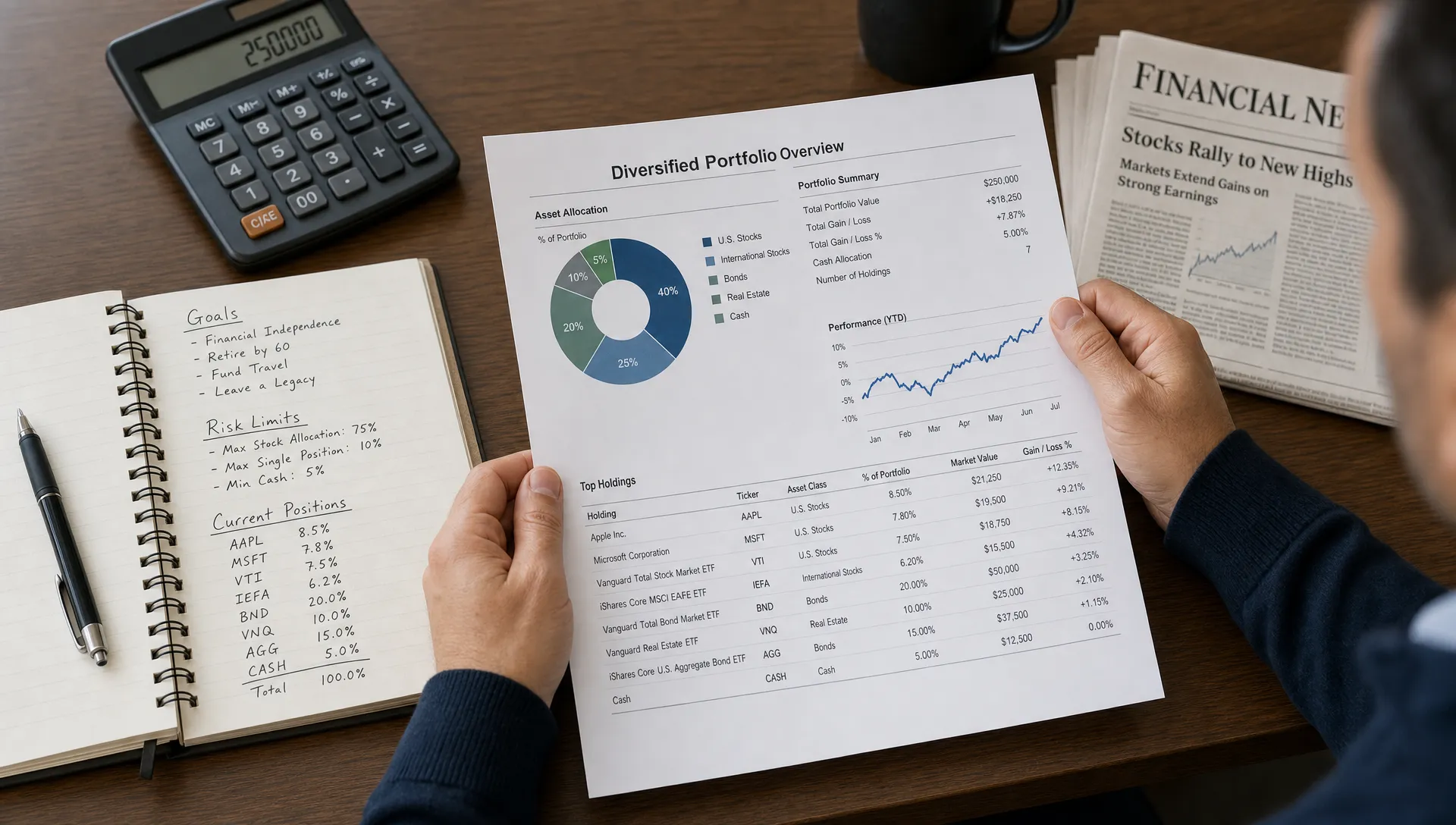
Concentration can create wealth, but it can also destroy it. If you are still learning, it is usually better to earn the right to concentrate over time rather than starting with oversized bets.
Diversify across shares, sectors, and asset types
Diversification is not about owning random investments. It is about reducing the chance that one company, sector, country, or economic event controls your financial future.
A portfolio with 12 shares may still be poorly diversified if all 12 are banks, technology companies, or businesses exposed to the same market cycle. True diversification considers industries, geographies, currencies, company sizes, and asset classes.
This is especially important when comparing shares with other long-term assets. Some investors combine listed equities with cash, bonds, funds, or property exposure, depending on their goals and risk tolerance. If you are researching property as part of a broader diversification plan, platforms with detailed listings and market guides, such as Dubai property listings and investment opportunities, can help you compare real estate options before making any allocation decision.
The key is not to own everything. The key is to avoid building a portfolio that depends on only one story being right.
Check costs, taxes, and currency risk before you trade
A share can perform well while your net return disappoints because of avoidable friction. Trading commissions, bid-ask spreads, foreign exchange fees, fund charges, withholding taxes, and local tax rules can all reduce your final result.
This matters more than many beginners realize. Frequent trading creates repeated costs, and those costs compound against you. If you buy foreign shares, currency movements can also affect your return. A U.S. stock may rise in dollars, but your return in euros or another home currency can be lower if exchange rates move against you.
Taxes are also important. Dividend tax treatment, capital gains rules, and account structures vary by country and personal situation. Educational articles can help you understand the concepts, but a qualified tax professional is often worth consulting if your portfolio becomes large or complex.
Avoid turning volatility into panic selling
Volatility is not the same as permanent loss. Share prices move daily because investors constantly update expectations about earnings, interest rates, inflation, politics, and risk appetite. If you invest in shares, price declines are part of the experience.
The danger is selling simply because the price has fallen, without asking whether the original investment case has changed. Sometimes selling is correct. If the business has deteriorated, debt has become dangerous, management has lost credibility, or your original thesis was wrong, exiting may protect capital.
But selling because the market feels uncomfortable can lead to a damaging pattern: buying after prices rise, selling after prices fall, then waiting until confidence returns at higher prices.
To avoid this, decide in advance what would make you sell. Your reasons might include a broken thesis, excessive valuation, better opportunities, portfolio rebalancing, or a change in personal goals. Without pre-defined reasons, emotion will often make the decision for you.
Greek Shares also covers related behavior traps in its guide to stock market investing mistakes to avoid early on, which is especially useful if market swings make you second-guess your plan.
Keep a watchlist, but do not let it become a wish list
A watchlist helps you follow companies before buying them. It gives you time to understand the business, observe management, compare valuation, and wait for a better price. Used well, it improves discipline.
Used poorly, a watchlist becomes a collection of names you are emotionally attached to. You may keep waiting for a stock to return to a previous low, ignore new risks, or buy simply because you have watched it for months.
A good watchlist should include more than the ticker symbol. Add a short summary of the business, key risks, valuation range, recent financial results, and the price or conditions that would make the share attractive. If the company changes, update your view. If the facts no longer support your interest, remove it.
This keeps the watchlist practical rather than emotional.
Review your portfolio on a schedule, not every hour
Checking prices constantly can make long-term investing feel like a minute-by-minute test. It increases the temptation to react to noise and can make normal volatility feel urgent.
A better approach is to review your portfolio on a regular schedule. For many long-term investors, monthly or quarterly reviews are enough. During the review, focus on business performance, portfolio balance, risk exposure, and whether each holding still matches your goals.
Daily price checking may feel productive, but it rarely improves decision quality. In fact, the more often you look, the more likely you are to see losses, even in a rising long-term market. That can push you toward unnecessary trading.
Your review process should answer three questions: Are my reasons for owning this share still valid? Has the position become too large or too small? Is there a better use for this capital?
Learn from mistakes without trying to win the money back quickly
Every investor eventually makes a poor decision. The important question is what you do next.
A common mistake after a loss is revenge trading: taking a bigger, riskier position to recover quickly. This usually makes the original problem worse. Losses create emotional pressure, and emotional pressure weakens judgment.
Instead, record what happened. Did you skip research? Buy too much? Follow hype? Ignore debt? Misjudge valuation? Sell because of fear? The lesson is more valuable than the immediate loss if it improves your future process.
This is where an investing journal becomes powerful. Over time, it can reveal patterns that are hard to notice in the moment. You may discover that your best decisions come after slow research, while your worst decisions come after excitement, fear, or impatience.
Frequently Asked Questions
What are the most important share tips for beginners? Start with clear goals, avoid investing money you need soon, understand the business before buying, diversify, control position size, and avoid acting on hype. These habits protect beginners from many costly mistakes.
How many shares should I own? There is no perfect number for everyone. The right number depends on your experience, portfolio size, time, and ability to follow each company. Owning too few shares can create concentration risk, while owning too many can make proper research difficult.
Should I sell a share when it falls? Not automatically. First ask whether the business fundamentals or your original investment case have changed. A falling price may signal a real problem, but it may also reflect temporary market volatility.
Are share tips from social media reliable? They should be treated with caution. Social media can help you discover ideas, but you should verify claims using company reports, official announcements, and independent research before investing.
How can I avoid emotional investing? Use written rules. Decide your goals, buying criteria, position size, and selling reasons before you invest. Reviewing your portfolio on a schedule rather than constantly checking prices can also reduce emotional decisions.
Build a process before you build a portfolio
Costly investing mistakes usually happen when decisions are rushed, emotional, or disconnected from a clear plan. The solution is not to find perfect share tips or predict every market move. The solution is to build a repeatable process that helps you make good decisions consistently.
Understand what you own. Pay attention to price. Diversify intelligently. Keep costs under control. Write down your reasons. Review your decisions honestly. These habits may not sound exciting, but they can make the difference between long-term progress and painful avoidable losses.
If you want to keep improving your investing knowledge, explore the educational guides and market resources on Greek Shares. A better process starts with better questions, and better questions can save you far more than the next hot tip ever will.