


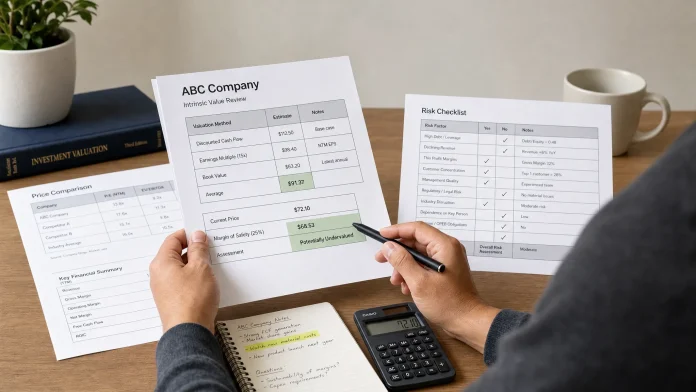
Good stock decisions rarely come from a single headline, chart pattern, or “hot tip.” They come from a repeatable process that helps you decide what to buy, when to wait, when to add, and when to sell.
That distinction matters. A stock can be a wonderful company and still be a poor investment at the wrong price. Another stock can look cheap but carry risks that make it unsuitable for your goals. The best tips on stocks are therefore not predictions. They are decision rules that reduce confusion and help you act with discipline.
Below are practical ways to improve your thinking before you put capital at risk.
Start with the decision you are actually making
Many investors begin with a vague question: “Is this a good stock?” A better question is more specific: “Is this stock suitable for my portfolio at today’s price, given my goals and risk tolerance?”
That small change improves the quality of your analysis. It forces you to connect the stock to your financial plan instead of judging it in isolation.
Before buying, adding, holding, or selling, write down the exact decision in one sentence. For example: “I am considering buying a 3% portfolio position in Company X because I believe its earnings can grow faster than the market over the next five years.”
That sentence gives you something to test. Without it, you may end up reacting to price movements rather than evaluating facts.
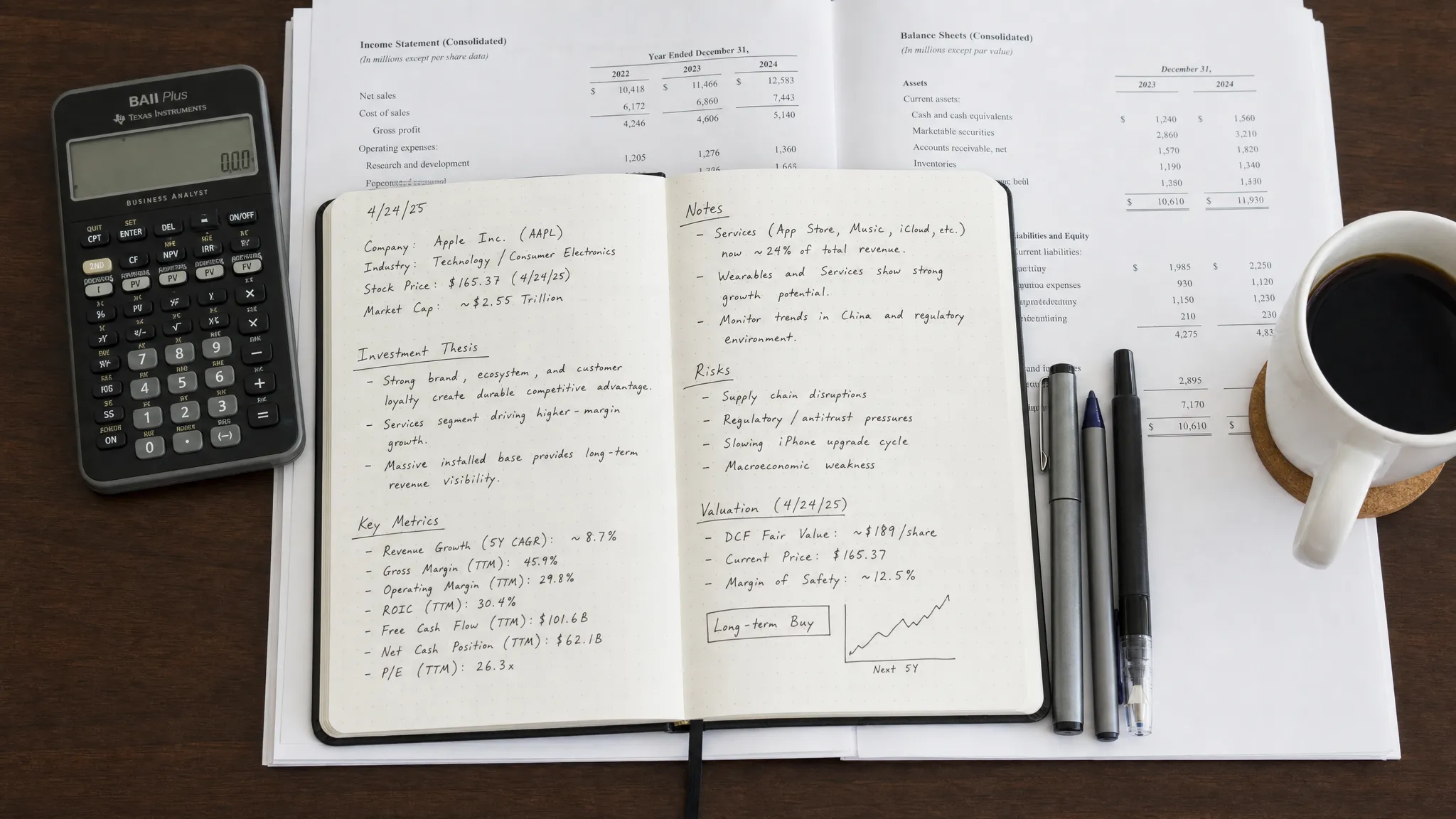
Know what kind of investor you are
A decision that is sensible for one investor may be wrong for another. A young investor building wealth over decades may accept more volatility than someone investing retirement savings for income. A trader may care about short-term price action, while a long-term investor may focus on earnings power and competitive advantages.
Greek Shares has covered the difference between trading and investing in more depth in its guide on trading vs long-term investing. The key point is simple: your stock decisions should match your style, time horizon, and temperament.
Use this quick framework before evaluating any stock:
| Question | Why it matters | Better decision habit |
|---|---|---|
| What is my time horizon? | A stock can be unsuitable if you need the money soon. | Avoid using short-term funds for volatile investments. |
| What role will this stock play? | Growth, income, diversification, and speculation require different standards. | Define the purpose before buying. |
| How much can I lose without panicking? | Emotional selling often follows oversized positions. | Set position size before the trade. |
| What would prove me wrong? | Every investment thesis needs a failure point. | Write down sell conditions in advance. |
This is not about predicting the future perfectly. It is about knowing yourself well enough to avoid predictable mistakes.
Understand the business before the ticker symbol
A stock is not just a price moving on a screen. It represents ownership in a business. If you cannot explain how the company makes money, who its customers are, and why it might remain competitive, you are probably not ready to buy it.
Start with plain-language questions. What does the company sell? Is demand recurring or cyclical? Does it have pricing power? Are its products essential, discretionary, or easily replaced? Who are its main competitors? How does the company earn profits during normal conditions, and what happens during stress?
This principle applies beyond investing. If you were choosing a premium food supplier, for example, you would care about sourcing, quality, origin, and reliability rather than judging only by packaging. A specialist retailer such as Beef Boutique highlights product selection and provenance because informed buyers want to know what they are actually purchasing. Stock investors should bring the same mindset to companies.
If the business is too complicated to understand, you do not have to invest. There are thousands of listed companies and many diversified funds. Passing on unclear opportunities is not failure. It is risk control.
Separate a good company from a good stock
One of the most common investing mistakes is confusing business quality with investment quality. A strong company can become a poor stock if investors pay too much for future growth. A weaker company can look cheap but remain cheap because its prospects are deteriorating.
Valuation helps you connect price to fundamentals. The price-to-earnings ratio, price-to-sales ratio, free cash flow yield, dividend yield, and enterprise value metrics are tools, not answers by themselves. A low P/E ratio may signal a bargain, but it may also signal falling earnings. A high P/E ratio may indicate overvaluation, but it may also reflect durable growth and high returns on capital.
If you are new to valuation, start with the basics in the Greek Shares article on the P/E ratio explained for stock investors. Then compare the stock against:
- Its own historical valuation range
- Similar companies in the same industry
- Its expected growth rate and profit margins
- The strength of its balance sheet
- The broader interest-rate environment
Valuation does not tell you exactly where a stock will trade next month. It helps you estimate whether the price you pay gives you a reasonable chance of being rewarded for the risk.
Read the financial statements with a skeptical eye
Stock decisions improve when you look beyond headlines like “earnings beat expectations” or “revenue missed estimates.” Those headlines are useful starting points, but they are not enough.
A company’s financial statements show how the business is performing. The income statement shows revenue, expenses, and profit. The balance sheet shows assets, liabilities, and financial strength. The cash flow statement shows whether reported profits are turning into actual cash.
The U.S. Securities and Exchange Commission provides public company filings through EDGAR, which investors can use to review annual reports, quarterly reports, and other disclosures. You do not need to read every line at first, but you should know where the original information comes from.
Focus on trends rather than one isolated number. Are revenues growing consistently? Are margins expanding or shrinking? Is debt manageable? Is free cash flow positive? Are profits supported by operations, or mostly by one-time gains and accounting adjustments?
For a structured approach, Greek Shares also explains how to examine corporate reports in how to read earnings reports clearly and how to analyze a company stock.
Estimate downside before dreaming about upside
Many investors spend too much time asking, “How much can I make?” A more useful first question is, “How much can I lose if I am wrong?”
Every stock has risks. The business may disappoint. The economy may weaken. Interest rates may rise. Competition may intensify. Management may allocate capital poorly. Even if your thesis is correct, the market may take longer than expected to recognize it.
Risk is not only about volatility. It is also about permanent loss of capital, concentration, liquidity, leverage, and your own ability to hold through stress.
Here is a simple way to think about common stock risks:
| Risk type | What it means | Practical response |
|---|---|---|
| Business risk | The company performs worse than expected. | Study revenue sources, margins, debt, and competitors. |
| Valuation risk | You pay too much for future growth. | Compare valuation to fundamentals and alternatives. |
| Concentration risk | One position dominates your portfolio. | Set maximum position sizes. |
| Liquidity risk | The stock is hard to trade at fair prices. | Be cautious with thinly traded shares. |
| Behavioral risk | You panic, chase, or overtrade. | Use written rules before emotions rise. |
Risk management is not a defensive afterthought. It is part of the investment decision itself. For more on this subject, read Greek Shares’ guide on how to manage portfolio risk wisely.
Use charts as decision tools, not fortune-telling devices
Charts can be helpful, but they should not replace business analysis. A chart shows price, volume, trend, and market behavior. It does not tell you whether a company has a durable competitive advantage or whether its stock is undervalued.
Charts are most useful when they improve timing and risk control. They can help you avoid buying into obvious weakness, identify support and resistance areas, compare volume on advances and declines, and choose between a market order and a limit order.
For example, if a stock has just dropped below a major support level on heavy volume, you may decide to wait for stability before buying. If a stock is rising on strong volume after a positive earnings report, you may investigate whether the move reflects a real change in fundamentals.
The key is balance. Fundamentals help you decide what you might want to own. Charts can help you decide how and when to act. Greek Shares explains this in more detail in how to read stock charts clearly.
Beware of tips, hype, and borrowed conviction
A stock tip can be useful if it leads you to research a company. It becomes dangerous when it becomes the reason you buy.
The problem with borrowed conviction is that you rarely know when to sell. If someone else’s enthusiasm got you into the stock, what will keep you calm when the price falls 25%? What will tell you whether the decline is a buying opportunity or a warning sign?
Be especially cautious with tips that include urgency, guaranteed returns, secret information, or pressure to act quickly. Legitimate investing does not require panic. The SEC’s investor alerts and bulletins are useful resources for recognizing common warnings around promotions, fraud, and market risks.
Instead of asking whether a tip sounds exciting, ask:
- Can I verify the facts from primary sources?
- Does the investment fit my portfolio and time horizon?
- What is the valuation compared with realistic growth?
- What are the main risks, and are they already reflected in the price?
- Would I still buy this stock if nobody online was discussing it?
If the answer to the last question is no, you may be reacting to social proof rather than analysis.
Build a buy, hold, or sell checklist
A checklist does not remove uncertainty, but it reduces impulsive decisions. It gives you a consistent process that you can improve over time.
A practical stock checklist should include business quality, valuation, financial strength, risk, portfolio fit, and exit conditions. Keep it short enough that you will actually use it.
| Decision area | Question to answer before acting |
|---|---|
| Business | Do I understand how the company makes money? |
| Advantage | What protects profits from competitors? |
| Financials | Are revenue, margins, cash flow, and debt moving in a healthy direction? |
| Valuation | What expectations are already built into the stock price? |
| Risk | What could go wrong, and how much could I lose? |
| Portfolio fit | Does this position improve or weaken diversification? |
| Sell rule | What change would make me reduce or exit the position? |
This kind of checklist is especially valuable during market volatility. When prices move quickly, your written process can prevent fear and greed from becoming your investment strategy.
Decide position size before you buy
Position sizing is one of the most overlooked stock tips because it feels less exciting than picking winners. Yet it often determines whether you can survive mistakes.
Even excellent investors are wrong. If one poor decision can damage your portfolio, the position was probably too large. A sensible position size lets you benefit if the thesis works while limiting harm if it fails.
Beginners often do better by starting small, especially with individual stocks. A modest position gives you emotional experience without exposing too much capital. As your knowledge improves, you can decide whether larger positions are justified.
Also consider whether the stock increases concentration. If you already own a broad index fund with heavy exposure to large technology companies, buying several additional technology stocks may make your portfolio less diversified than it appears.
Review your decisions after the outcome
Good investors learn from both gains and losses. A profitable trade can still be a poor decision if it was based on luck, hype, or excessive risk. A losing investment can still be a reasonable decision if your process was sound and the outcome came from an unpredictable event.
Keep a simple investing journal. Record why you bought, what you expected, what risks you identified, and what would make you sell. Then review the entry after earnings reports, major news, or a meaningful price move.
The goal is not to punish yourself for being wrong. The goal is to find patterns. Do you chase stocks after big rallies? Do you sell quality companies too early? Do you ignore debt? Do you overreact to short-term losses? These patterns are often more important than any single stock pick.
Greek Shares discusses this mindset in learning from your mistakes, a habit that can steadily improve your decision quality.
A better stock decision process in one paragraph
Before buying a stock, define the decision, understand the business, check the financial statements, compare valuation with realistic expectations, identify risks, decide position size, and write down when you would sell. Before holding, ask whether the original thesis still works. Before selling, separate emotional discomfort from actual evidence. This process will not make every investment profitable, but it can help you avoid many avoidable errors.
Frequently Asked Questions
What are the most important tips on stocks for beginners? Start with education, diversify, avoid using money you need soon, understand each company before buying, and keep position sizes modest. Beginners should focus more on building a repeatable process than finding the perfect stock.
How do I know if a stock is worth buying? A stock may be worth buying if the business is understandable, financially sound, reasonably valued, suitable for your portfolio, and supported by a clear investment thesis. You should also know what would make you change your mind.
Should I follow stock tips from friends or social media? Treat them as research ideas, not instructions. Verify the facts, read company filings, study valuation and risks, and make sure the stock fits your own goals. Never buy only because someone else sounds confident.
Are charts useful for long-term investors? Yes, but mainly as risk and timing tools. Charts can help you understand trend, volume, and possible entry points, but they should be used alongside fundamental analysis rather than as a substitute for it.
When should I sell a stock? Consider selling when the original thesis is broken, the stock becomes clearly overvalued, the position becomes too large, you find a better opportunity, or you need to rebalance. Avoid selling only because of short-term fear.
Continue improving your investing decisions
Stock market success is not about knowing every answer in advance. It is about learning how to ask better questions before capital is at risk.
Greek Shares offers investing education articles, market guides, glossary resources, and practical tutorials to help investors build financial literacy and discipline. Explore more guides on Greek Shares and keep refining your process one decision at a time.