


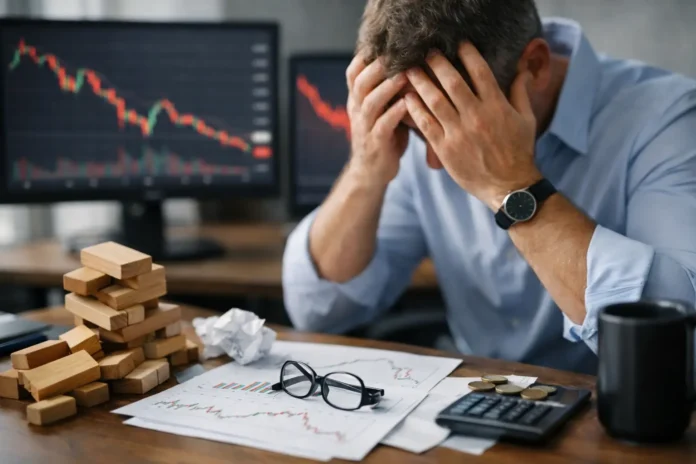
You usually do not notice an emotional mistake while it is happening. It feels like caution when you sell after a drop. It feels like confidence when you chase a stock that is already surging. That is why an emotional investing mistakes list matters. Most costly decisions are not caused by a lack of intelligence. They come from normal human reactions applied in a setting where patience, probability, and discipline matter more than impulse.
Investing is not only about learning what a stock is, how valuation works, or why diversification helps. It is also about understanding your own behavior under stress. Markets move fast, headlines trigger fear, and short-term price action can make even a sound plan feel wrong. If you want to become a better investor, you need a framework for recognizing emotional errors before they damage your returns.
Why an emotional investing mistakes list matters
Many investors assume the biggest risk is picking the wrong stock. In practice, poor behavior often does more damage than imperfect analysis. A reasonable portfolio held through market volatility can still produce acceptable long-term results. A good portfolio constantly disrupted by fear, greed, and second-guessing often cannot.
This is especially true for newer investors. When you are still building experience, every market drop can feel personal and every rally can feel like proof you are missing out. Without a process, emotions become your strategy by default.
An emotional investing mistakes list is useful because it turns vague feelings into recognizable patterns. Once a mistake has a name, it becomes easier to catch. You stop saying, “I just had a bad feeling,” and start saying, “I am reacting to short-term volatility.” That shift matters.
The emotional investing mistakes list most investors face
Panic selling during market declines
This is one of the most common and damaging mistakes. A stock or the broader market falls sharply, and the urge to “stop the bleeding” takes over. Selling can feel like taking control, but in many cases it locks in losses and prevents recovery.
That does not mean selling is always wrong. Sometimes fundamentals change, risk becomes too concentrated, or your original thesis no longer holds. The mistake is selling only because prices fell and fear became intolerable. Price declines by themselves do not automatically mean your investment is broken.
A better approach is to ask a more disciplined question: what changed in the business, balance sheet, industry, or valuation? If the answer is “nothing important,” panic may be driving the decision.
FOMO buying after a strong rally
Fear of missing out pushes investors into stocks after much of the move has already happened. You see a company up 40 percent in a few months, social media is full of success stories, and suddenly waiting feels irresponsible. In reality, buying simply because others are making money is not analysis.
Momentum can continue, so this mistake is not always punished immediately. That is what makes it dangerous. A few lucky outcomes can train you to chase performance, and eventually you buy near a peak because excitement replaced valuation discipline.
If a stock only looks attractive after it becomes popular, pause. Ask whether you would still buy it if no one else were talking about it.
Holding losers too long to avoid admitting you were wrong
Many investors delay selling bad positions because selling makes the mistake real. On paper, a loss still feels reversible. Once sold, it becomes final. This emotional resistance can keep you trapped in weak businesses while stronger opportunities pass by.
There is a trade-off here. Long-term investing requires patience, and not every temporary decline deserves a sale. The key is distinguishing temporary market disappointment from a damaged investment thesis. Holding through noise is discipline. Holding because your ego cannot accept being wrong is something else.
A written reason for owning each investment can help. If the reason no longer applies, continuing to hold may be emotional, not rational.
Selling winners too early
The flip side of holding losers too long is cutting winners too quickly. Investors often feel pressure to “take profits” as soon as a stock performs well. Realized gains feel safe and satisfying. But strong businesses can keep compounding for years, and repeatedly selling quality too early can reduce long-term portfolio growth.
This mistake often comes from discomfort, not logic. Once you have a gain, you become afraid of losing it. That fear can outweigh the original reason you invested in the first place.
Profit-taking is not always wrong. Rebalancing, valuation concerns, or position size limits may justify trimming. The mistake is selling only because seeing a gain created anxiety.
Overtrading from impatience
Some investors equate activity with progress. If they are not buying, selling, rotating, or reacting, they feel inactive. But investing rewards good decisions, not constant decisions.
Overtrading usually comes from emotional discomfort with waiting. Markets are noisy, and doing nothing can feel passive. Still, many portfolios improve when the investor reduces unnecessary moves. Every trade should have a clear reason tied to strategy, risk, or valuation. If the reason is boredom, that is a warning sign.
Anchoring to your purchase price
A stock bought at $50 falls to $35, and the investor says, “I will sell when it gets back to break-even.” That number feels important because it is personal. The market does not care.
Your purchase price may matter for tax planning or portfolio records, but it does not determine future value. The real question is whether the investment is attractive today compared with your alternatives. Waiting to break even can keep capital stuck in weak positions for the wrong reason.
Letting recent news override long-term thinking
Fresh headlines carry emotional weight. A bad earnings report, geopolitical event, or inflation print can make investors feel that everything has changed overnight. Sometimes it has. Often it has not.
Recency bias leads people to overemphasize the latest information and underweight the longer trend. This is how investors abandon a long-term plan because of short-term noise. When that happens repeatedly, the portfolio starts reflecting the news cycle instead of a sound strategy.
A useful habit is to separate signal from volatility. Ask whether the latest event changes your multi-year view or only your mood today.
Following the crowd for emotional comfort
There is psychological safety in doing what everyone else is doing. If many people are buying, buying feels safer. If many people are selling, selling feels prudent. Crowds reduce the feeling of individual responsibility.
The problem is that market prices already reflect collective behavior. By the time a trend feels obvious and socially validated, much of the opportunity may be gone. Crowd behavior also becomes extreme near emotional highs and lows.
Independent thinking does not mean being contrarian at all times. It means making decisions because they fit your process, not because they reduce social discomfort.
How to reduce emotional investing mistakes
The goal is not to become emotionless. That is unrealistic. The goal is to create conditions where emotions have less authority over your decisions.
Start with a written investment plan. It should define your time horizon, diversification rules, risk tolerance, position sizing, and reasons to buy or sell. In stressful moments, a written plan gives you something more reliable than your current mood.
Next, limit how often you check your portfolio if short-term fluctuations trigger impulsive behavior. For long-term investors, constant monitoring can create the illusion that every move requires action. Usually it does not.
It also helps to use simple decision rules. You might require a waiting period before making a non-urgent trade, or review a sale only after writing down what changed fundamentally. These small speed bumps can prevent costly emotional reactions.
Diversification matters here too. A concentrated portfolio may offer higher upside, but it also creates stronger emotional swings. If your positions are too large for your comfort, you are more likely to panic, freeze, or chase. Good portfolio construction supports good behavior.
Finally, accept that discomfort is part of investing. Even disciplined investors feel fear during market declines and envy during rallies. The difference is not the absence of emotion. It is the ability to act according to process anyway.
When emotions are useful and when they are not
Emotions are not always the enemy. Sometimes unease points to a real mismatch between your portfolio and your risk tolerance. If normal market volatility keeps you awake at night, your allocation may be too aggressive. In that case, the lesson is not to ignore your feelings. It is to redesign the portfolio so you can stick with it.
The key distinction is whether emotion is identifying a structural problem or trying to control a temporary feeling. Adjusting an overly risky plan is wise. Abandoning a sound plan because this week was uncomfortable usually is not.
As Greek Shares teaches across many investing topics, progress comes from building repeatable habits. The investor who learns to recognize emotional patterns gains an advantage that has little to do with prediction and a lot to do with discipline. The market will keep testing your patience. Your job is not to react faster. It is to think better when reacting feels easiest.