


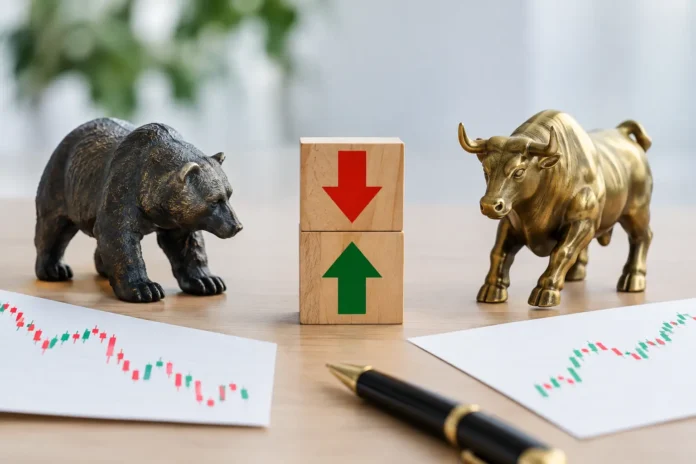
A stock can fall 10% and still leave two bearish investors with very different results. One may have a controlled, predefined loss. The other may face a margin call or a loss that keeps growing as the stock rises. That is the central issue in short selling vs put options: both aim to profit from a decline, but they expose investors to risk in fundamentally different ways.
Neither approach is a shortcut to easy money. Betting against a stock requires a correct view on direction, but it also requires sound judgment about timing, position size, and what can go wrong. For most newer investors, understanding the risk structure matters more than learning the mechanics.
How Short Selling Works
Short selling means selling shares you do not own, with the expectation that you can buy them back later at a lower price. Your broker typically lends you the shares. If the price declines, you repurchase the shares, return them to the lender, and keep the difference, minus costs.
Suppose you short 100 shares of a stock at $50. You receive $5,000 from the sale. If the stock falls to $40, you can buy 100 shares for $4,000, return them, and realize a $1,000 gross profit.
The problem appears when the stock rises rather than falls. If it climbs to $70, buying back those 100 shares costs $7,000. Your loss is $2,000. There is no fixed ceiling on how high a stock can rise, which means a short position has theoretically unlimited loss potential.
Short sellers also face ongoing costs and practical constraints. The broker may charge borrow fees, particularly when shares are scarce. You may be responsible for payments equivalent to any dividends paid while the short is open. And if the lender recalls the shares or your broker changes its requirements, you may have to close the position earlier than planned.
How Put Options Work
A put option gives its buyer the right, but not the obligation, to sell 100 shares of a stock at a specified price, called the strike price, on or before a stated expiration date. A put generally gains value when the underlying stock declines.
For example, assume a stock trades at $50 and you buy one put option with a $50 strike price for a premium of $3 per share. Since one contract usually represents 100 shares, the cost is $300. If the stock falls to $40 before expiration, the put has at least $10 per share of intrinsic value, or $1,000 per contract. Ignoring other factors, that value exceeds the $300 premium paid.
If the stock remains above $50 at expiration, the put may expire worthless. In that case, your maximum loss is the premium, or $300. That defined loss is one of the main reasons investors consider buying puts instead of shorting shares.
However, puts have an expiration date. A stock can eventually fall and still leave a put buyer with a loss if the decline happens after the option expires. Options are also affected by implied volatility, interest rates, and time decay. You can be right about a company but wrong about the calendar.
Short Selling vs Put Options: The Core Differences
The most useful comparison begins with risk, not potential profit. A short sale can produce a large loss if the stock rallies sharply. A long put has a maximum loss equal to the premium paid. That makes the cost of a put easier to identify before entering the trade.
Timing works differently as well. A short position does not have an expiration date, although borrow availability, fees, margin requirements, and broker decisions can force action. A put has a firm deadline. Its value erodes as expiration approaches if the expected price drop does not occur quickly enough.
Capital requirements can also lead investors toward different choices. Short selling requires a margin account and collateral. Brokers set their own requirements, and losses can trigger a margin call, requiring you to deposit cash or securities. Buying a put usually requires paying the premium in full upfront. The smaller upfront cost can make options appear safer, but it can also tempt investors to buy more contracts than they understand.
Profit behavior is another distinction. A short position gains dollar for dollar as the stock declines. If a stock falls from $50 to $40, the short seller makes $10 per share before costs. A put’s value may rise by more or less than the stock’s decline, depending on the strike price, time remaining, and changes in implied volatility.
Liquidity matters in both cases. A heavily traded stock may be straightforward to short and may have active options markets. Less liquid stocks can have expensive borrow fees, wide bid-ask spreads, or options contracts that are difficult to trade at a fair price. Never assume that an attractive price on a screen is readily available for your trade size.
When a Put May Fit Better
Buying a put can be appropriate when you want a bearish position with a clearly limited loss. It may also be useful when you own a stock and want temporary protection against a potential decline. In that case, the put functions more like insurance than a stand-alone bet.
Consider an investor who owns 100 shares purchased at $50 and worries about a near-term earnings report. Buying a put can set a floor under the position for a defined period. If the stock falls sharply, gains in the put may offset part of the loss in the shares. If the stock rises, the investor still participates in the upside, but the premium paid reduces the overall return.
A put is not automatically the better choice simply because its loss is capped. Option premiums can be expensive when the market expects volatility. If you repeatedly buy short-dated puts that expire worthless, the small, known losses can add up quickly.
When Short Selling May Fit Better
Short selling may be more suitable for experienced investors who have strong conviction that a stock is overvalued and who need more time for the thesis to develop. Unlike a put, a short does not lose value solely because time passes. If the stock takes several months to decline, the position can still work, provided the investor can maintain it and manage borrowing costs.
That flexibility comes with substantial responsibility. A short seller must monitor the position, maintain adequate margin, and prepare for sudden rallies. Stocks with high short interest can experience short squeezes, where rising prices force short sellers to buy shares to close their positions. Those purchases can push the price still higher, intensifying losses.
For this reason, short selling is generally not a casual strategy for an investor who is still building a core portfolio. A company can be overpriced and still become more overpriced. Markets can remain optimistic longer than a bearish investor can remain solvent.
Questions to Ask Before Taking a Bearish Position
Before choosing either strategy, define the reason for the trade in plain language. Are you reacting to a disappointing earnings report, hedging an existing holding, or making a longer-term valuation call? If the answer is vague, the trade is probably too early.
Next, identify what would prove your thesis wrong. For a short sale, decide in advance at what price or loss level you will exit. For a put, calculate the break-even price at expiration, which is generally the strike price minus the premium paid. Then ask whether the stock can realistically reach that level within the time available.
Position size deserves equal attention. A defined-risk option trade can still be damaging if you allocate too much of your portfolio to premiums. A short sale can become dangerous quickly if it is large relative to your account and the stock moves against you. Risk limits are not a sign of weak conviction. They are what allow an investor to survive being wrong.
Finally, understand the instrument before using it with meaningful money. Options approval levels, margin rules, tax treatment, and trading costs vary by broker and account type. Paper trading or studying a few real option chains without placing a trade can be a useful first step.
The Better Choice Depends on the Job
Short selling and buying puts express a bearish view, but they are not interchangeable. Short selling offers open-ended timing with open-ended risk. Put buying offers limited risk with a limited lifespan. The right choice depends on whether you need a hedge or a speculative position, how certain you are about timing, and how much loss you can responsibly accept.
A bearish trade should never be driven by the feeling that a stock has risen too far, too fast. Start with a clear thesis, a planned exit, and a position size that leaves room for the market to disagree with you. That discipline is more valuable than finding the perfect way to bet on a decline.