


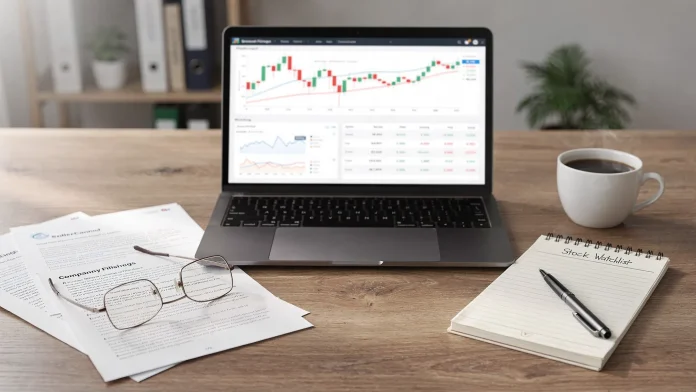
A stock watchlist should never be treated as a shopping list. It is a research tool that helps you follow strong businesses, compare valuations, and wait for opportunities that fit your goals.
That distinction matters even more this year. Interest rates, inflation expectations, artificial intelligence spending, geopolitical risk, energy prices, and consumer behavior can all change the market’s favorite stocks quickly. A company can be excellent and still be a poor purchase if the price already assumes perfection.
Below is an educational framework for building an updated stocks watchlist this year, followed by major names and sectors worth monitoring. This is not financial advice or a recommendation to buy or sell any security. Always verify current prices, earnings, guidance, debt levels, and risks using official company filings and your own analysis before investing.
What “Stocks to Watch” Really Means
A stock to watch is a company that deserves research, not automatic investment. Investors often confuse attention with action. The better approach is to identify businesses with durable advantages, then wait until the risk-reward balance becomes attractive.
A good watchlist stock usually has several of these qualities:
- A strong competitive position in a large or growing market
- Consistent revenue, earnings, or cash flow generation
- A balance sheet that can survive difficult conditions
- Management with a clear capital allocation record
- Valuation that can be compared sensibly with growth and risk
- Clear factors to monitor, such as margins, debt, regulation, or demand
The purpose is simple: when market volatility creates opportunity, you already know which businesses you want to study more deeply.
Market Themes Shaping Updated Stocks This Year
Before looking at individual companies, investors should understand the environment. Stock prices move not only because of company performance, but also because expectations change.
Interest Rates and Inflation
Higher interest rates can reduce the present value of future earnings, which often affects high-growth stocks more than mature dividend-paying companies. Lower rates can support valuations, but only if earnings remain healthy.
Investors should follow central bank communication, inflation data, and bond yields. The Federal Reserve’s monetary policy updates are useful for understanding the policy backdrop, while inflation releases help explain changes in market expectations.
Artificial Intelligence and Technology Spending
AI remains one of the most important investment themes, but investors should separate real earnings power from excitement. Some companies sell essential infrastructure, some use AI to improve products, and others merely mention AI in presentations.
The key question is not “Is this company involved in AI?” It is “Can this company convert AI demand into durable cash flow?”
Consumer Strength and Discretionary Spending
Consumer stocks depend heavily on employment, wages, credit conditions, and household confidence. Investors should watch whether consumers continue spending on travel, beauty, restaurants, premium retail, and digital services.
One practical way to understand this theme is to observe real-world spending patterns, not only public-company earnings. Local service businesses, including premium self-care providers such as Lumina Skin Sanctuary, can offer clues about whether consumers are still willing to pay for discretionary experiences and personal services.
Healthcare Demand and Innovation
Healthcare is often considered defensive, but not all healthcare stocks behave the same way. Large pharmaceutical companies, medical device makers, insurers, and biotechnology firms have very different risk profiles.
Investors should watch patent expirations, regulatory approvals, drug pipelines, pricing pressure, and reimbursement risk.
Energy, Infrastructure, and Geopolitical Risk
Energy stocks can benefit from high commodity prices, but they are also cyclical. Infrastructure and industrial companies may benefit from long-term capital spending, but margins can be affected by labor costs, materials, and financing conditions.
For this sector, free cash flow discipline is often more important than revenue growth alone.
Updated Stocks to Watch This Year: A Research Shortlist
The table below includes widely followed companies that many investors may want to monitor this year. They are not ranked, and inclusion does not mean the stock is undervalued. Use the list as a starting point for research.
| Stock | Sector | Why It Is Worth Watching | Key Risks to Monitor |
|---|---|---|---|
| Microsoft (MSFT) | Technology | Cloud, enterprise software, AI integration, recurring revenue | AI spending returns, cloud competition, valuation |
| Nvidia (NVDA) | Semiconductors | AI chips, data center demand, hardware ecosystem | Competition, export controls, cyclical demand, high expectations |
| Alphabet (GOOGL) | Technology/Advertising | Search, YouTube, cloud, AI capabilities | Regulatory pressure, AI disruption to search, ad market weakness |
| Amazon (AMZN) | E-commerce/Cloud | AWS, advertising, logistics scale, retail efficiency | Cloud growth slowdown, margin pressure, high capital spending |
| Apple (AAPL) | Consumer Technology | Ecosystem, services revenue, brand loyalty, buybacks | Hardware cycles, China exposure, innovation expectations |
| ASML (ASML) | Semiconductor Equipment | Critical lithography equipment for advanced chips | Semiconductor cycles, geopolitical export rules, customer concentration |
| JPMorgan Chase (JPM) | Financials | Scale, deposit base, diversified banking operations | Credit losses, regulation, yield curve pressure |
| Visa (V) | Payments | Global payment network, cross-border spending, high margins | Regulation, competition, consumer slowdown |
| Eli Lilly (LLY) | Healthcare | Diabetes and obesity drug demand, pipeline strength | Valuation, manufacturing capacity, regulatory and pricing risk |
| Costco (COST) | Consumer Staples/Retail | Membership model, customer loyalty, defensive retail profile | Rich valuation, margin pressure, consumer weakness |
| Exxon Mobil (XOM) | Energy | Scale, cash flow potential, energy security theme | Oil and gas price volatility, policy risk, capital discipline |
| Berkshire Hathaway (BRK.B) | Diversified Financials | Cash reserves, insurance operations, diversified holdings | Succession, acquisition opportunities, exposure to market cycles |
How to Analyze These Stocks Before Buying
A watchlist becomes valuable only when you attach a process to it. Without a process, investors tend to chase the stocks that have already risen the most.
Start With the Business, Not the Chart
Ask what the company actually does, who its customers are, and why those customers keep buying. If you cannot explain the business in simple language, you probably are not ready to own the stock.
For example, a semiconductor equipment company, a bank, and a retailer all require different analysis. Revenue growth means something different in each case. Margins, debt, inventory, regulation, and customer concentration should be interpreted within the right industry context.
Compare Growth With Valuation
A great company can become a disappointing investment if purchased at an excessive price. Valuation does not need to be perfect, but it must be reasonable relative to growth, risk, and quality.
Common valuation tools include:
- Price-to-earnings ratio for profitable companies
- Price-to-sales ratio for companies with temporarily low margins
- Free cash flow yield for mature cash-generating businesses
- Enterprise value to EBITDA for certain industrial or capital-intensive firms
- Dividend yield and payout ratio for income-focused stocks
If you are new to valuation, Greek Shares’ guide to the P/E ratio explained for stock investors is a useful place to deepen your understanding.
Read the Latest Earnings Report
Do not rely only on headlines. Earnings releases, quarterly reports, and annual filings contain important details about revenue growth, margins, debt, cash flow, and management expectations.
For U.S.-listed companies, investors can use the SEC’s EDGAR database to find 10-K and 10-Q filings. These reports are not always exciting to read, but they can protect you from making decisions based on incomplete information.
Identify the Main Variable That Could Change the Story
Every stock has a key variable. For a bank, it may be credit quality. For a chip company, it may be data center demand. For a retailer, it may be same-store sales and margins. For an energy company, it may be commodity prices and capital discipline.
Your job is to know what would prove your investment thesis right or wrong.
Sector-by-Sector Watchlist Ideas
Individual stock selection is difficult because each company has unique risks. For many investors, it helps to begin with sectors and then narrow the list.
Technology and AI Infrastructure
Technology remains central to market leadership, but investors should be selective. The strongest technology companies usually combine high margins, recurring revenue, strong balance sheets, and large addressable markets.
Stocks such as Microsoft, Nvidia, Alphabet, Amazon, Apple, ASML, and Taiwan Semiconductor Manufacturing are commonly watched because they sit near major technology trends. Still, the danger is paying too much for growth that may already be expected.
For this group, monitor capital expenditures, AI monetization, cloud growth, chip demand, and regulatory pressure.
Healthcare and Pharmaceuticals
Healthcare can provide exposure to long-term demographic demand, but investors must understand product pipelines and policy risk. Large pharmaceutical companies may offer strong cash flow, while biotechnology firms can be much more speculative.
Eli Lilly and Novo Nordisk have attracted attention because of demand for diabetes and obesity treatments. However, investors should watch valuation, production capacity, competition, and reimbursement policies. A promising medical theme does not automatically make every healthcare stock a good investment.
Financials and Banks
Banks can benefit from scale, deposits, and diversified financial services, but they are sensitive to credit cycles and regulation. JPMorgan Chase is often watched as a high-quality large bank, while other financial stocks may offer different risk-reward profiles.
For financials, focus on loan losses, deposit costs, net interest income, capital ratios, and management commentary about the economy.
Consumer Stocks
Consumer companies can be excellent long-term investments when they have brand strength, pricing power, and loyal customers. Costco, Amazon, and select luxury or discount retailers are often monitored because they reveal different parts of consumer behavior.
In this category, investors should pay attention to margins, inventory, membership trends, advertising revenue, and whether customers are trading up or trading down.
Energy and Industrials
Energy and industrial stocks can add useful diversification, but they are often cyclical. Exxon Mobil, Chevron, Caterpillar, and similar companies may be worth watching when investors are concerned about inflation, infrastructure spending, or energy security.
For these stocks, do not focus only on revenue. Watch free cash flow, debt, capital spending, dividend coverage, and management discipline during boom periods.
A Simple Watchlist Scoring Framework
To avoid emotional decisions, score each stock before considering an investment. The exact scoring system is less important than using the same process consistently.
| Factor | Question to Ask | Score Range |
|---|---|---|
| Business quality | Does the company have a durable advantage? | 1 to 5 |
| Financial strength | Is the balance sheet strong enough for downturns? | 1 to 5 |
| Growth outlook | Are earnings and cash flow likely to grow over time? | 1 to 5 |
| Valuation | Is the price reasonable compared with fundamentals? | 1 to 5 |
| Risk clarity | Do you understand what could go wrong? | 1 to 5 |
| Portfolio fit | Does it match your goals and risk tolerance? | 1 to 5 |
A stock with a high-quality business but a poor valuation score may belong on your watchlist, not in your portfolio. A stock with an attractive valuation but weak financial strength may be a value trap.
Red Flags to Watch Before Investing
Even popular stocks can become dangerous when investors ignore warning signs. Before buying any stock this year, look for signs that the story may be weakening.
Common red flags include declining margins, rising debt, slowing revenue growth, repeated earnings disappointments, aggressive accounting, insider selling without explanation, heavy customer concentration, and management that avoids difficult questions.
Also be careful with stocks that rise sharply only because of a fashionable theme. AI, clean energy, defense, healthcare innovation, and digital payments are real trends, but not every company connected to them will create shareholder value.
Watchlist vs. Portfolio: Keep Them Separate
One of the most useful habits an investor can build is separating curiosity from commitment. Your watchlist can contain 30, 50, or even 100 companies. Your portfolio should usually be much more selective.
A watchlist is where you learn. A portfolio is where you accept risk.
Before moving a stock from your watchlist into your portfolio, answer these questions:
- What is my reason for buying this specific stock?
- What price or valuation would make the risk acceptable?
- What would make me sell?
- How much of my portfolio can I risk in this position?
- Am I buying because of analysis or because of recent price movement?
If you cannot answer these questions, keep watching.
How Often Should You Update Your Stock Watchlist?
Review your watchlist at least quarterly, ideally after earnings season. You do not need to react to every market move, but you should update your assumptions when new information appears.
A practical schedule looks like this:
- Monthly: Review price movements and major news
- Quarterly: Read earnings reports and update financial metrics
- Annually: Reassess the long-term business thesis
- After major events: Recheck risks after acquisitions, regulatory decisions, management changes, or sharp guidance revisions
For help interpreting market headlines without overreacting, read Greek Shares’ guide on how to read recent news about stock market moves.
Common Mistakes When Following Updated Stocks
The biggest mistake is buying a stock simply because it appears on a popular list. By the time a company becomes widely discussed, much of the good news may already be reflected in the price.
Another mistake is comparing stocks only by recent performance. A stock that has doubled is not automatically expensive, and a stock that has fallen is not automatically cheap. Price movement must be compared with earnings power, balance sheet quality, and future expectations.
Finally, many investors fail to consider position sizing. Even if your analysis is correct, an oversized position can damage your portfolio if timing, valuation, or market conditions turn against you.
Frequently Asked Questions
What are updated stocks? Updated stocks are companies currently worth reviewing based on recent market conditions, earnings trends, sector themes, or valuation changes. The term should refer to a refreshed research list, not an automatic buy list.
Are stocks to watch the same as stocks to buy? No. A stock to watch deserves further research. A stock to buy must also fit your goals, valuation standards, risk tolerance, time horizon, and portfolio allocation.
How many stocks should be on a watchlist? Many individual investors can manage 20 to 50 stocks on a watchlist, but the ideal number depends on experience and available time. It is better to understand 15 companies well than follow 100 superficially.
Should beginners buy individual stocks from a watchlist? Beginners should be cautious. Many may be better served by learning with diversified funds first, then gradually researching individual stocks. Greek Shares’ article on index funds vs stocks can help you compare both approaches.
How do I know when to remove a stock from my watchlist? Remove or downgrade a stock when the original thesis weakens, debt becomes concerning, management credibility declines, growth slows without a clear explanation, or the business no longer fits your strategy.
Final Thoughts
The best updated stocks to watch this year are not necessarily the most popular names on financial media. They are the companies you can understand, value, and monitor with discipline.
Use this year’s watchlist as a research map. Study the business, compare valuation with growth, read the latest filings, and decide in advance what would make a stock attractive or too risky. In investing, patience is often more valuable than prediction.
If you want to build stronger investing habits, continue exploring Greek Shares’ educational guides on stock analysis, risk management, valuation, and portfolio discipline before making your next decision.